
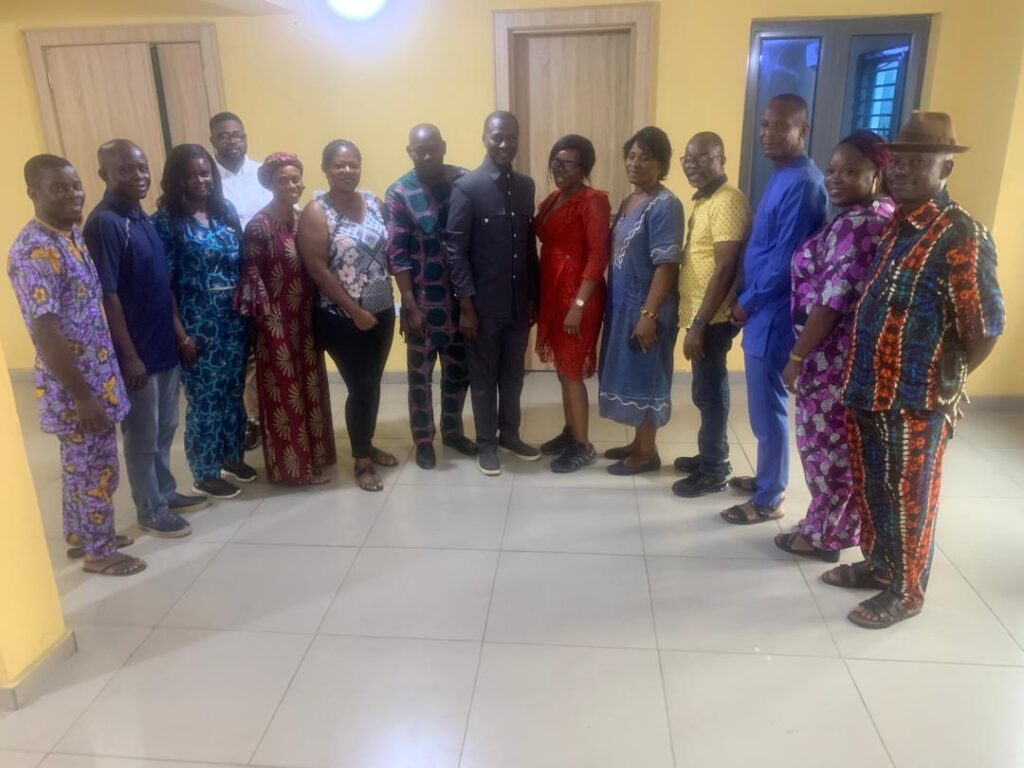
Lagos journalists received a strong charge to raise the bar of their reporting by adopting precision and data-driven journalism. This is a call that comes as misinformation continues to threaten public trust in the media.The charge was issued at a one-day workshop tagged “Precision and Data-Driven Journalism”, organized by the Nigeria Union of Journalists (NUJ) Lagos Council to sharpen the accuracy, depth and objectivity of news coverage among its members.The training was facilitated by veteran journalist and editor Mr. Lekan Otufodunrin, who drew from years of editorial experience to make a compelling case for data journalism. Setting the tone early, he defined precision journalism as the application of social and behavioural science research methods to news gathering, relying on measurement, verification and context to produce credible reporting. He noted that the practice goes by several names, including database journalism, data journalism and accountability reporting, but at its core, it is simply a type of journalism that uses data to tell stories. Recounting firsthand stories of how this approach had shaped his own professional growth, he urged journalists to hold accuracy as a non-negotiable standard in their work.Otufodunrin left no one in doubt reaffirming that in today’s newsroom, data journalism has moved from being a nice-to-have to an absolute must. In an era of information overload, he argued it enhances credibility, sharpens investigative reporting and helps audiences understand complex issues. “Data does not speak for itself,” he said. “Journalists give it voice and meaning.”He stressed its democratic value in countries like Nigeria in tracking government spending, monitoring elections and holding public institutions accountable. On ethics, he flagged risks around data misinterpretation, privacy and bias in data collection and analysis.Acknowledging the challenges facing African journalists from unreliable data and skill gaps to political resistance, he remained optimistic. “Innovation and collaboration continue to expand data journalism practice,” he insisted.Welcoming participants, NUJ Lagos Council Chairman Mr. Adeleye Ajayi urged participants to absorb and apply what they would learn in their newsrooms, promising that the council would sustain such initiatives. “We will continue to organize more training programmes of this nature,” he said.The training reflects a growing recognition within Nigeria’s journalism community that the newsroom of the future must be grounded in facts, figures and rigorous verification not just speed.
- MUYIWA OJEKUNLE