

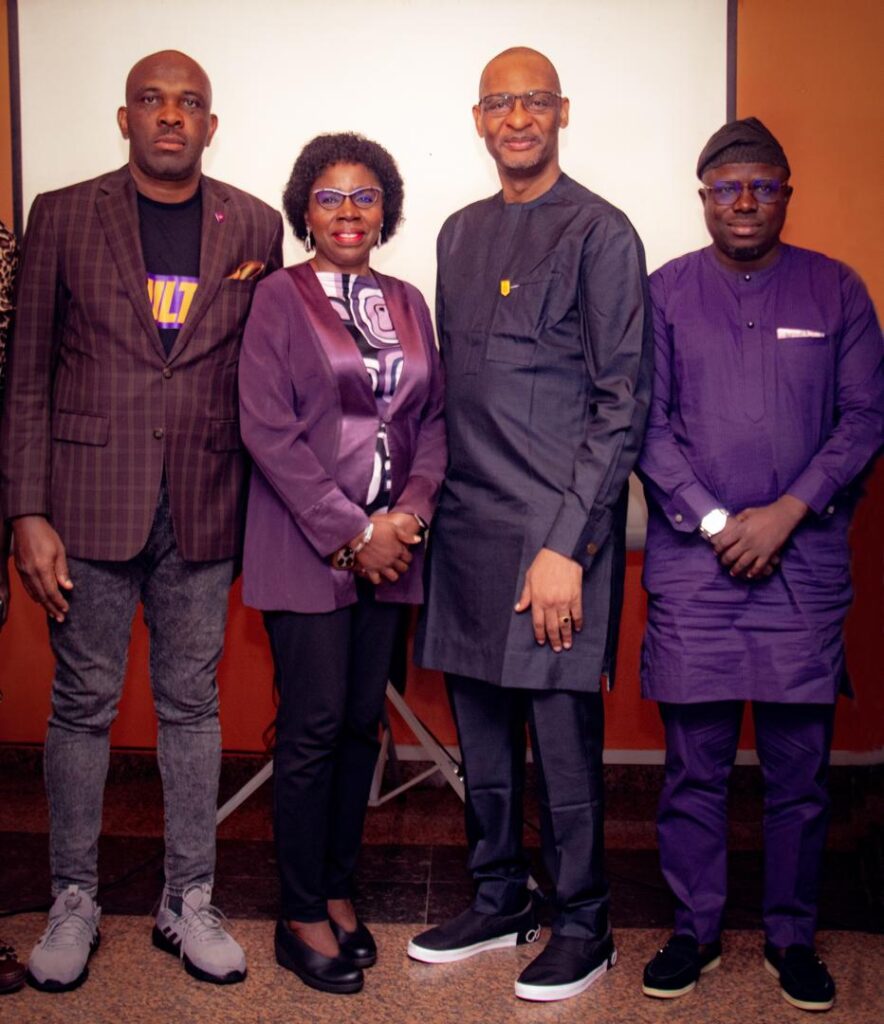
Polaris Bank on Friday hosted media professionals in Lagos for the 12th edition of its annual seminar, with a charge to rebuild public trust in both the media and financial institutions through ethical reporting, data verification, and responsible use of Artificial Intelligence. The conference held at Jefinik Place, GRA, Ikeja, brought together journalists, editors, and industry experts to examine how credibility can be restored in an era of misinformation.The bank said the initiative was part of its broader commitment to intellectual empowerment for journalists, and to support excellence in reportage that strengthens the credibility of Nigeria’s financial sector. Organizers noted that trust remains the most critical currency for both banks and the media, especially at a time when public confidence is easily eroded by fake news and AI-generated content.Delivering a keynote, Prof. Abigail Ogwezzy-Ndisika of the Department of Mass Communication, University of Lagos, said society can no longer deny the presence of AI. She played a video presentation to demonstrate how AI tools are reshaping journalism. However, she warned that AI must be used positively and not as a tool for fraud or manipulative income-generating schemes.Prof. Ogwezzy-Ndisika called for a Data Corroboration Strategy as a way to rebuild trust in institutions. She urged journalists to adopt ethical guidelines, referencing the Ethical Guardrails and the Paris Charter. According to her, editors must develop techniques to guide AI so that storytelling remains factual and human-centered. “As a reporter covering financial health, you need to focus on verified data,” she said.The professor also stressed crisis management as another pillar of trust, introducing what she called a Transparency & Reputation Matrix. She cited the 2023 Naira Redesign and cash shortage as a case study, noting how misinformation from the Central Bank of Nigeria around that period disorganized markets and eroded public confidence. She advised journalists to go beyond bank press releases and prioritize authenticity in their reporting.While acknowledging that AI is a paradox with both good and bad sides, Prof. Ogwezzy-Ndisika maintained that it can never replace the human journalist. She said AI’s real value lies in data analysis and research support, not in replacing editorial decisions or human empathy. According to her, “AI equilibrium is not useless, but it must be well used,”.Also speaking, the Founder and Chairman of Proshare, Mr. Olufemi Awoyemi, addressed the operational and commercial pressures facing newsrooms today. He commended journalists, describing their work as “real serious work.” He noted that many newsrooms are now turning to AI to ease pressure, but warned that the challenges go beyond technology to include funding and sustainability.Mr. Awoyemi highlighted relevant AI tools for research and investigation, but cautioned that AI can only accelerate journalism, not replace it. He said editorial judgement, public interest responsibility, source relationships, cultural understanding, and accountability remain uniquely human. Her added that “Technology can help, but it cannot carry the burden of truth,”The Proshare boss encouraged journalists to go the extra mile in their duties by conducting complete investigations and producing stories that are credible and acceptable to all stakeholders. He recalled the media’s role during the June 12, 1993 election and the “Hope ’93: On The March Again” campaign of MKO Abiola, saying that period unexpectedly changed the narrative of Nigerian journalism and made reporters more expressive and bold in holding power to account.The 12th Polaris Bank Media Seminar ended with a consensus: rebuilding the “Trust Economy” requires collaboration between banks and the media. Both institutions, participants agreed, must embrace transparency, fact-checking, and ethical AI use to regain and retain public confidence. As Polaris Bank closes another edition of the seminar, the message to Lagos journalists was clear, in the age of AI, credibility is the ultimate headline.
– Arthur Igbolaju Richard