
Moshood Abiola Polytechnic former Ogun Poly is a citadel of learning that has produced lots of elites personalities in all successful ramifications of life .
In the Western Region , this tertiary institution remain the best .
2006, a young student from Christian family got admission to study Civil Engineering at Mapoly. He was from humble home . His parents were Pastors. They assumed he would follow their steps in the ministry .
Unfortunately, the young man sold his soul to devil! He joined cultism. Eiye Fraternity.
To everyone surprise, the Pastor’s Son Became MAPOLY’s Most Feared Hitman:
The Chilling Story of Gaddafi.
In 2009, the halls of Moshood Abiola Polytechnic became the stage for one of the most disturbing transformations in Nigerian campus cult history.
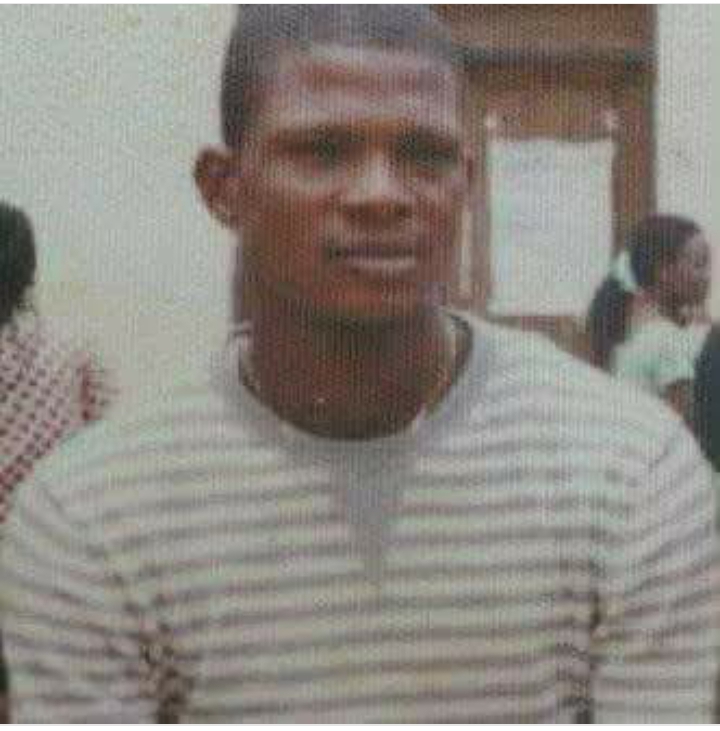
His name was Gaddafi.
But before the guns, the violence, and the manhunt, Gaddafi was simply a young man raised in a deeply religious home. His parents were devoted pastors, and he grew up surrounded by faith, discipline, and the expectation that he might one day follow in their footsteps.
When he gained admission to Moshood Abiola Polytechnic in 2006 to study Civil Engineering, everything seemed to be going according to plan.
He was described as intelligent, quiet, and peaceful.
Then, just one year later, everything changed.
In 2007, Gaddafi joined the Airlords, better known as the Eiye Confraternity.
What began as a student’s involvement in a secret society soon became a dangerous descent into violence. Gaddafi quickly earned the reputation of a ruthless “Dove”—a feared enforcer willing to carry out violent assignments for his group.
And he was not alone.
He eventually formed a deadly alliance with Aboki, a notorious former Vikings member who had moved from eastern Nigeria to MAPOLY in pursuit of higher education.
Together, their reputations grew.
But Gaddafi’s growing influence also frightened some of the senior members of his own group. They reportedly feared that giving him too much power would unleash uncontrollable violence.
Despite those reservations, Gaddafi eventually rose through the ranks.
By 2009, he had become the second-in-command of the Airlords at MAPOLY.
Then came the war.
The Airlords and the Buccaneers were locked in a bitter confrontation, and the violence that followed would change the history of the campus.
Until then, there had been an unwritten boundary surrounding campus cult clashes: the school grounds were largely off-limits.
Gaddafi shattered that boundary.
During the conflict, he reportedly shot and eliminated two Buccaneer members inside MAPOLY itself.
It was a shocking escalation.
The campus was no longer just a place for lectures, examinations, and student life. Violence had crossed through its gates and entered the very heart of the institution.
The incident triggered outrage.
Authorities launched a massive manhunt, and Gaddafi became a wanted man.
For weeks, he remained on the run.
But eventually, the police received a crucial tip from an informant.
On October 20, 2009, officers traced him to his girlfriend’s residence.
When they arrived, the house appeared empty.
But the police weren’t leaving empty-handed.
As they searched the property, they looked toward the surrounding area and spotted something unusual—a man hiding high up in a tree.
It was Gaddafi.
The manhunt had finally caught up with him.
When officers opened fire, Gaddafi was struck multiple times. He fell from the tree and was taken away with serious injuries.
He later died at the police station.
And just like that, the story of a young man who had once been raised to embrace faith and possibly become a spiritual leader came to a violent end.
Gaddafi’s story remains a chilling reminder of how quickly a promising life can be consumed by the culture of violence surrounding campus cultism.
He entered MAPOLY as a Civil Engineering student with a future ahead of him.
He left behind a reputation built on fear, bloodshed, and a violent death.
Sometimes, the most tragic part of a crime story isn’t how it ends—but how different the beginning could have been.